Heat pump maintenance and service
A heat pump works large parts of the year. That is why it needs regular maintenance and proper service to keep working well over time. With simple measures you can contribute to better airflow, more even heat and safer everyday operation.
- Certified local technicians
- All heat pump brands
- Written service report
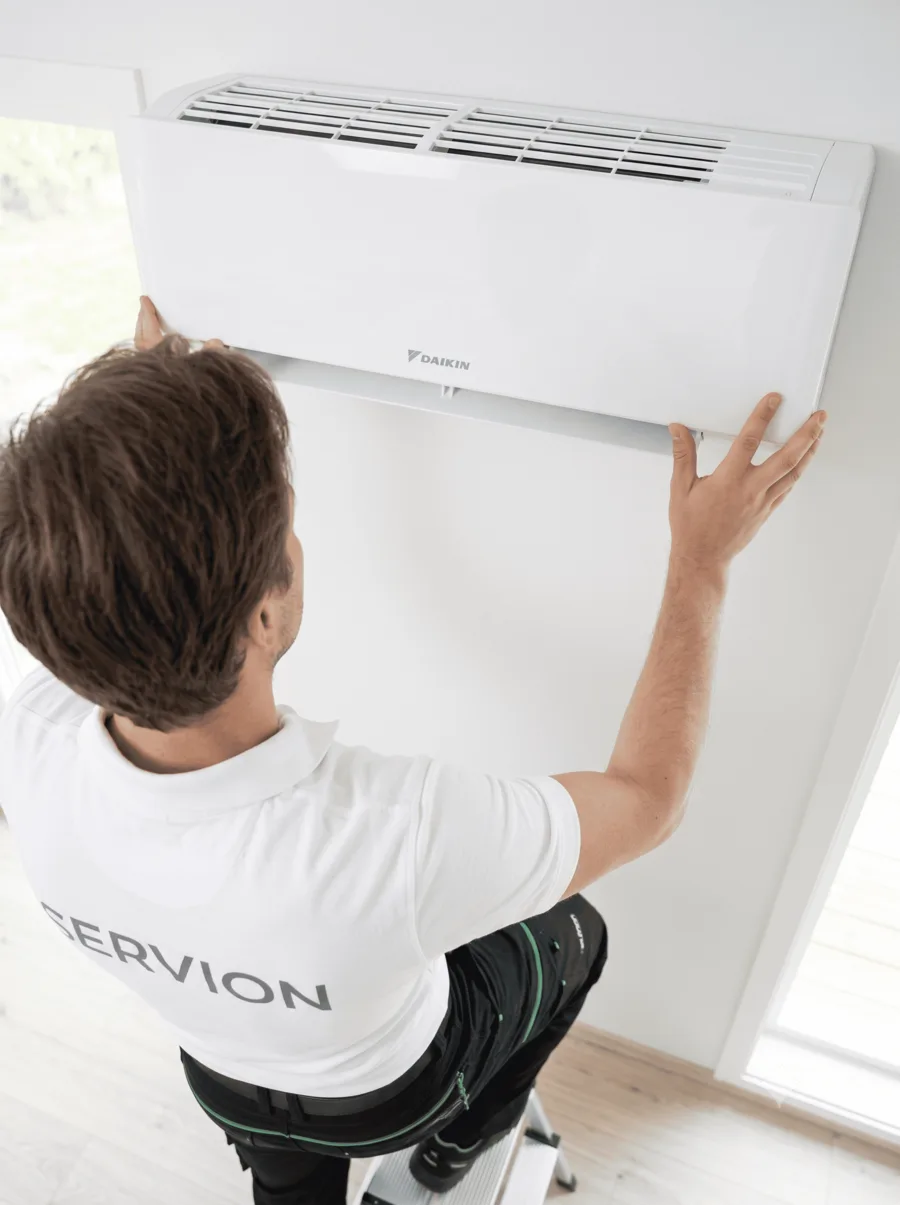
Heat pump maintenance
Good maintenance is first and foremost about keeping the heat pump clean and free of obstructions. When the filters, indoor unit and outdoor unit get good airflow, the heat pump can work better. That can contribute to more even heat, better comfort and lower strain on the system.
As an owner you can do some simple maintenance yourself. Clean the filters regularly according to the manufacturer's instructions. Also make sure furniture, curtains or other things do not block the airflow from the indoor unit. The outdoor unit should be kept free of leaves, snow, ice and anything else that can block air in and out.
Pay attention to changes. If the heat pump makes unusual noise, heats less than before, water runs where it should not, or you experience icing and operating problems, you should contact professionals. Small signs can be the start of bigger faults. Early help can often make troubleshooting easier.
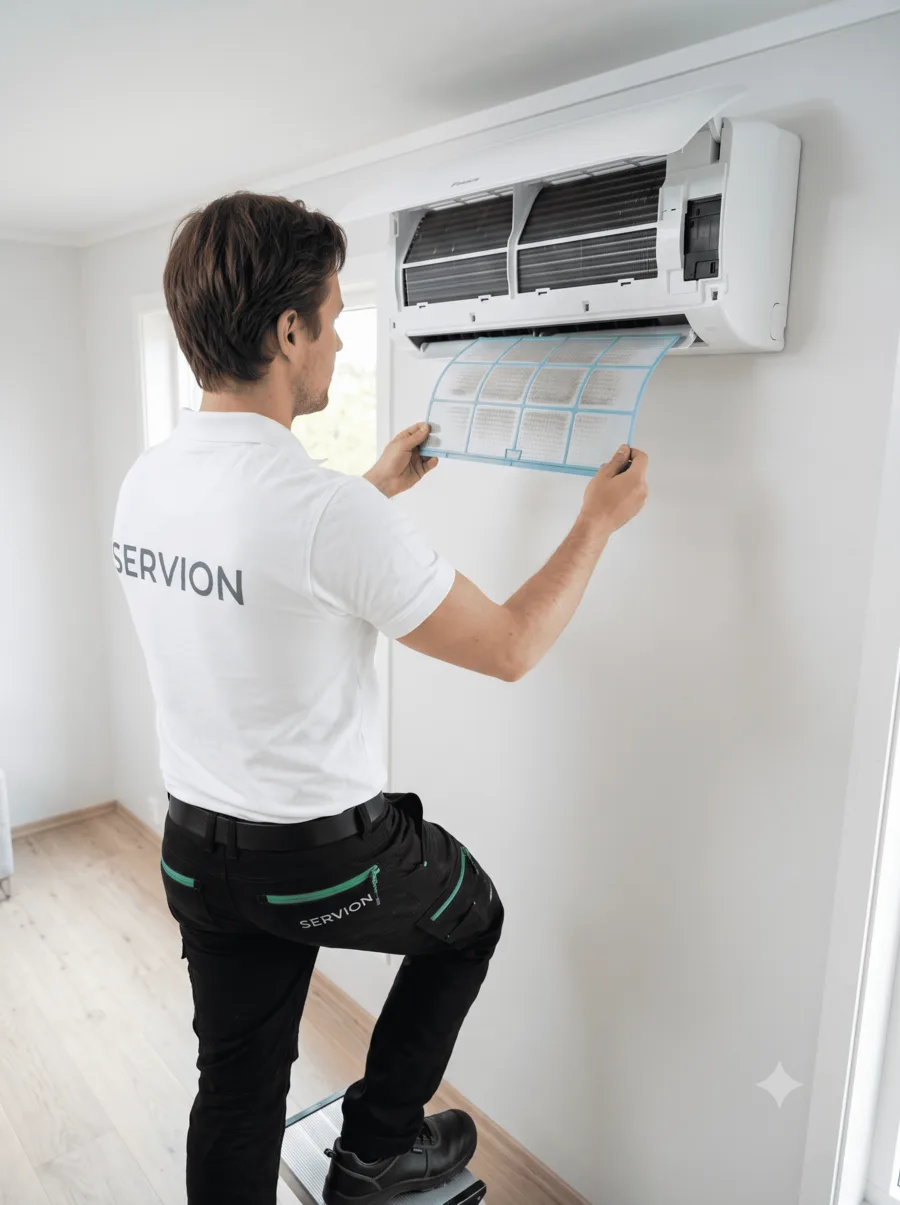
Service of your heat pump
A service is a more thorough review of the heat pump. Professionals check important parts of the system, clean where needed, check operation and look for signs of faults or wear. Proper service can contribute to better operation, longer lifespan and fewer problems over time.
During a service we look at how the heat pump performs in practice. We assess airflow, temperature, sound, cleanliness and general condition. If we find something that should be followed up, we explain it in a simple way and advise you on the way forward.
After a completed service the customer receives a written service report. The report gives a tidy overview of what has been checked, what has been done, and whether anything was found that should be followed up. That makes it easier to stay in control of the heat pump and document the maintenance over time.
Frequently asked questions about heat pump maintenance and service
Why is heat pump maintenance important?
Maintenance helps the heat pump get good airflow and work more efficiently. A clean and well-maintained heat pump can give better comfort, more even heat and safer operation.
What can I do myself?
You can clean the filters in the indoor unit, keep the area around the heat pump tidy and make sure the airflow is not blocked. Always follow the manual for your heat pump.
How often should the filters be cleaned?
It depends on usage, dust, pets and indoor climate. Many need to clean the filters regularly, especially in periods when the heat pump is used a lot. Also see the manufacturer's recommendations.
What is the difference between maintenance and service?
Maintenance is simple measures you can do yourself, such as cleaning filters and checking airflow. A service is a more thorough review carried out by professionals, where the heat pump is checked and assessed more closely.
How often should the heat pump be serviced?
The need varies with usage, age, placement and environment. Many choose regular service to get better control of operation and condition. If you are unsure, Servion can make a simple assessment.
What is included in a service?
A service normally includes checking operation, cleanliness, airflow, temperature, sound and general condition. If something seems abnormal, we assess what should be done next.
Do I get documentation after the service?
Yes. After a service the customer receives a written service report. It shows what has been checked, what has been done, and whether anything was found that should be followed up.
Can service contribute to lower electricity use?
Proper service and good maintenance can help the heat pump run better and use energy more correctly. How much you can save depends on usage, home, temperature and the condition of the heat pump, among other things.
When should I contact professionals?
You should contact professionals if the heat pump heats less than before, makes unusual noise, smells strange, stops often, leaks water or gets a lot of ice on the outdoor unit. The same applies if you are unsure whether it works as it should.
Why does the heat pump smell bad?
Smell can be caused by dust, dirt or moisture in the indoor unit. Cleaning the filters can help, but if the smell persists the heat pump should be checked by professionals.
What can happen if the heat pump does not get service?
Over time, dirt, poor airflow and wear can affect operation. That can lead to poorer heating, more noise, higher strain and greater risk of faults.
Should the heat pump be checked before winter?
It can be a good idea. Before the cold season it is extra important that the heat pump works well. A check can uncover faults, poor airflow or a need for cleaning before the system has to work hard.
Can Servion help with troubleshooting?
Yes. Servion helps with troubleshooting if the heat pump is not working as it should. We investigate the problem, explain what we find and advise you on the solution.
Does Servion offer heat pump service in Trøndelag?
Yes. Servion is based in Orkanger and helps customers across Trøndelag with service, maintenance, installation and troubleshooting of heat pumps.
Book a service for your heat pump
Do you want better control of your heat pump? Contact Servion for service, maintenance or troubleshooting. We help you with safe and tidy follow-up.
Stay updated on heat pump tips
Sign up for our newsletter and receive useful articles about heat pumps, maintenance and energy savings.